
Strange Walls? – Study Trip Explores Historic Residences in Today’s Western Poland
Strange Walls? – Study Trip Explores Historic Residences in Today’s Western Poland
On the last weekend of September 2021, a study group set out for the second time to remote villages and small towns to explore the diversity of architecture and history of manor houses and estates as well as the fate of their builders and inhabitants. This time, the journey led to the Lubuskie Voivodeship and its history full of upheavals.
Peggy Lohse
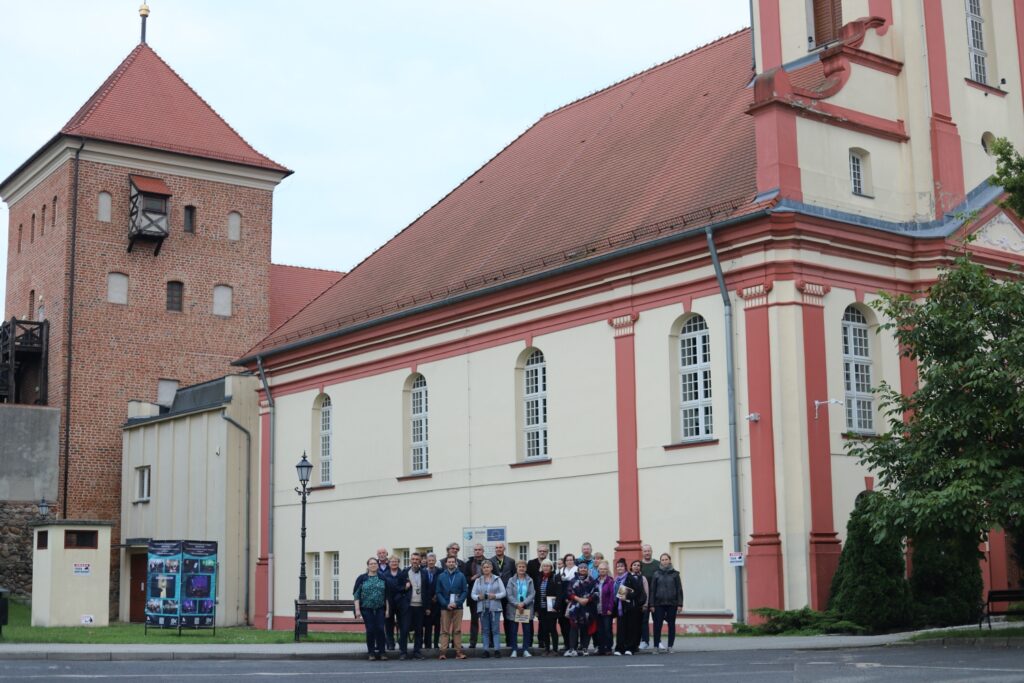
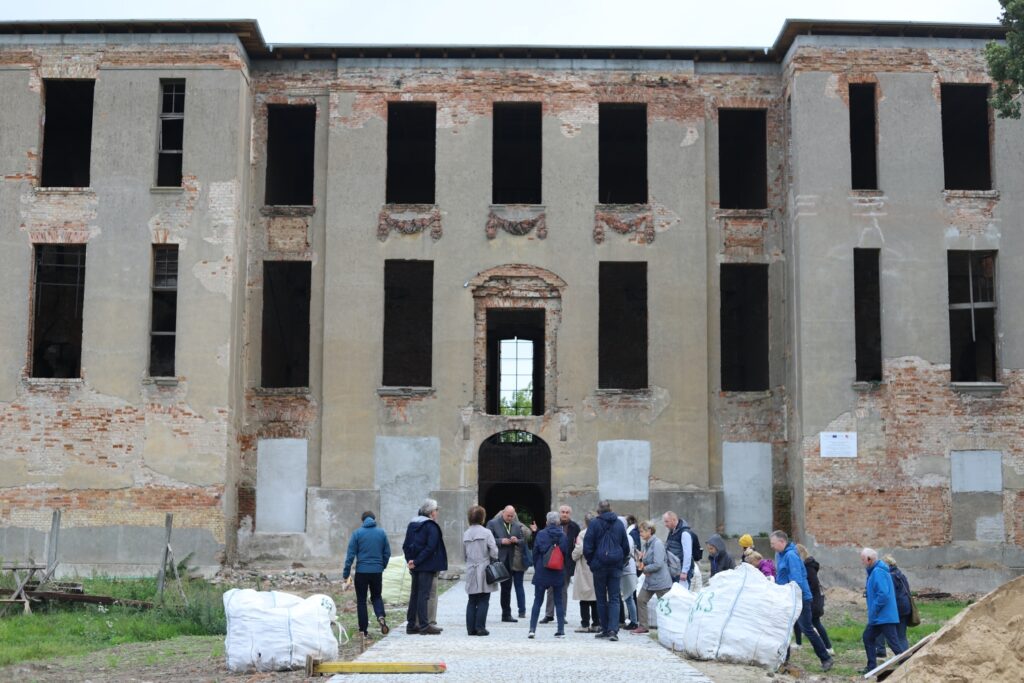
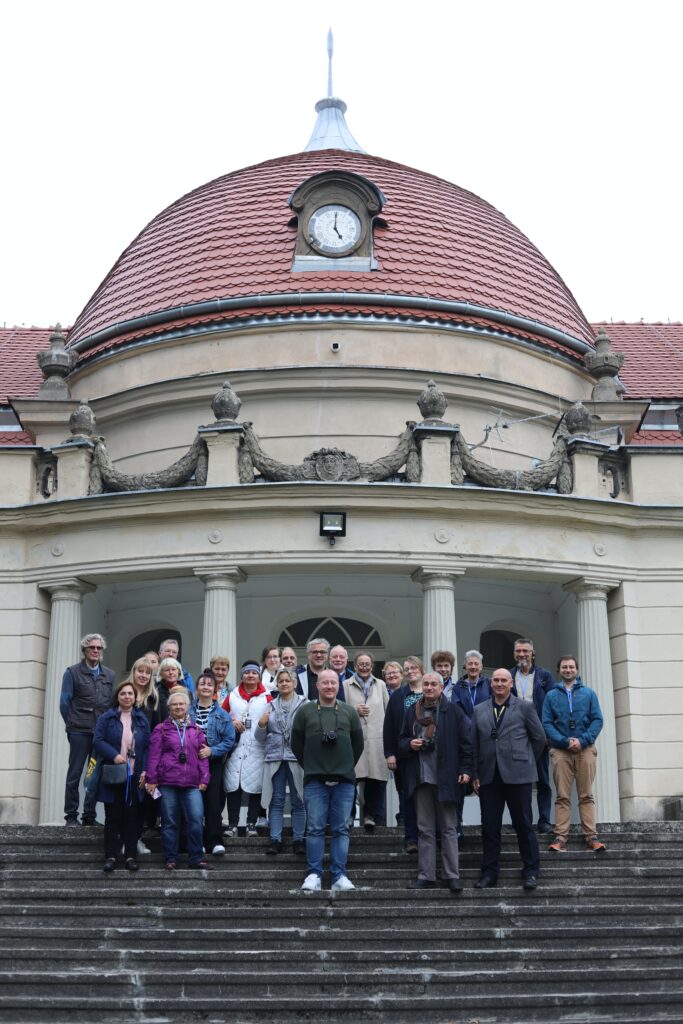
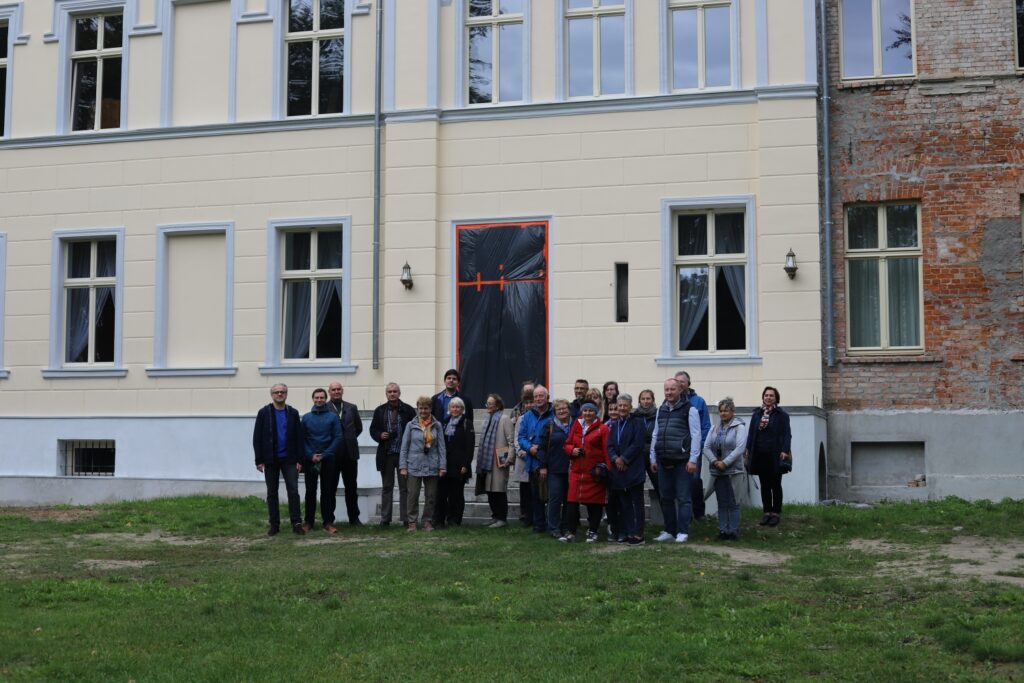
It is supposed to be a walk-in ruin – the dilapidated Johanniterschloss in Słońsk, formerly Sonnenburg. After a fire in the 1970s, decades of vacancy and increasing weather damage, there is now a concept for using the brown skeleton of the building, which appears threatening on this cool and windy September morning. The more than 50 curious eyes and ears of the Viadrina tour group admire the building, the large, empty window cavities, the small stucco remnants in the brick walls. Here in Słońsk they begin their three-day study tour of a total of 16 residences, manor houses and castles in the former Neumark and Sternberg Land, today mostly located in the western Polish Lubuskie Voivodeship between the urban centres of Gorzów Wielkopolski (Landsberg an der Warthe) and Zielona Góra (Grünberg).
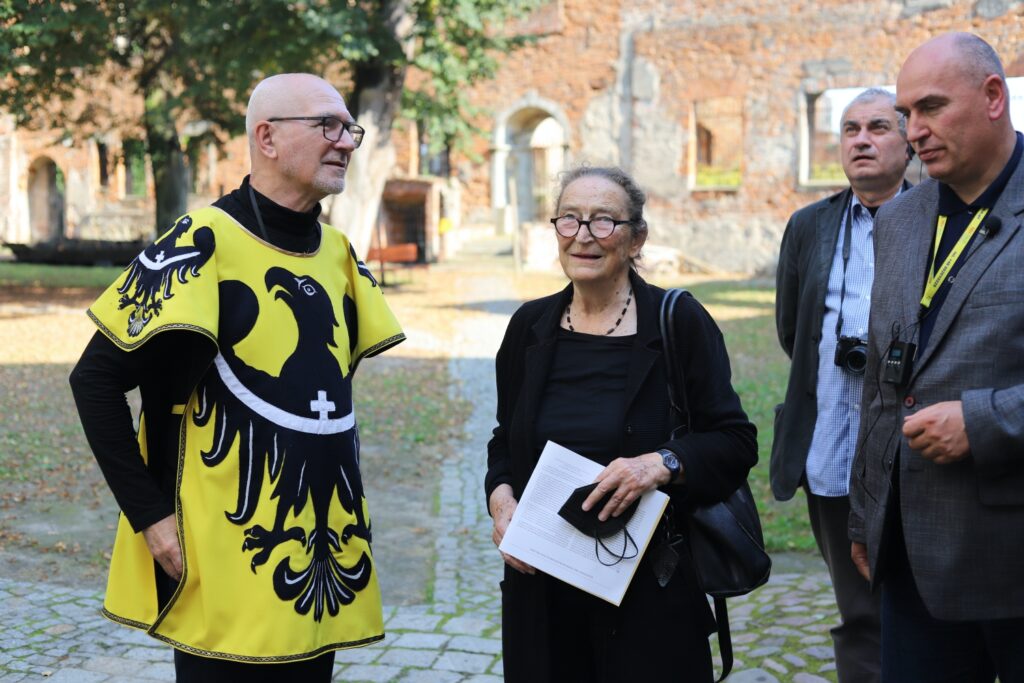
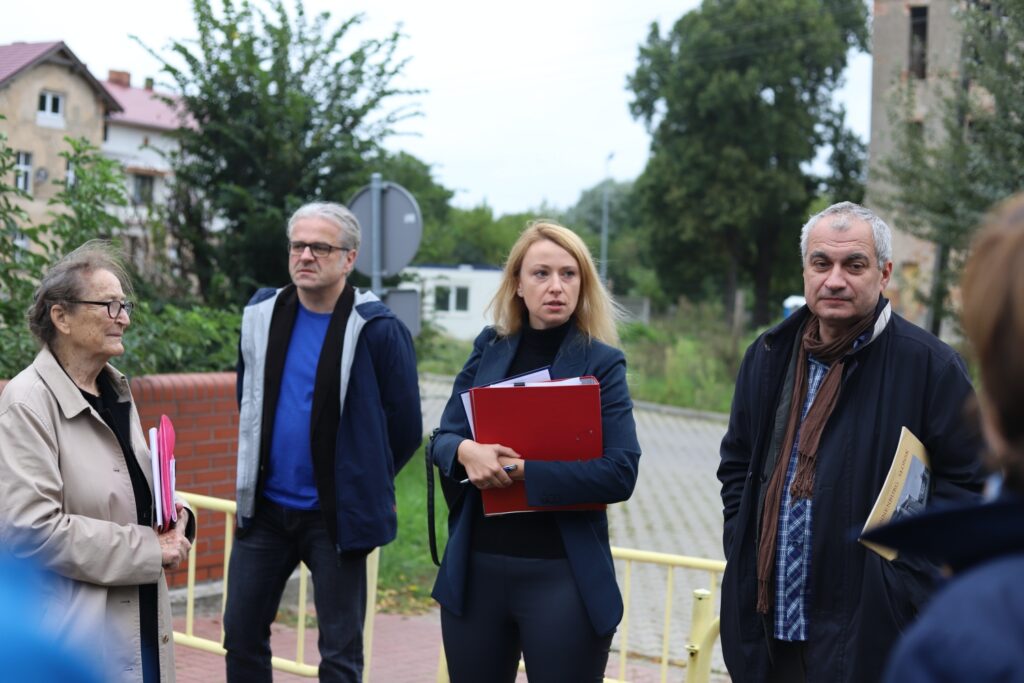
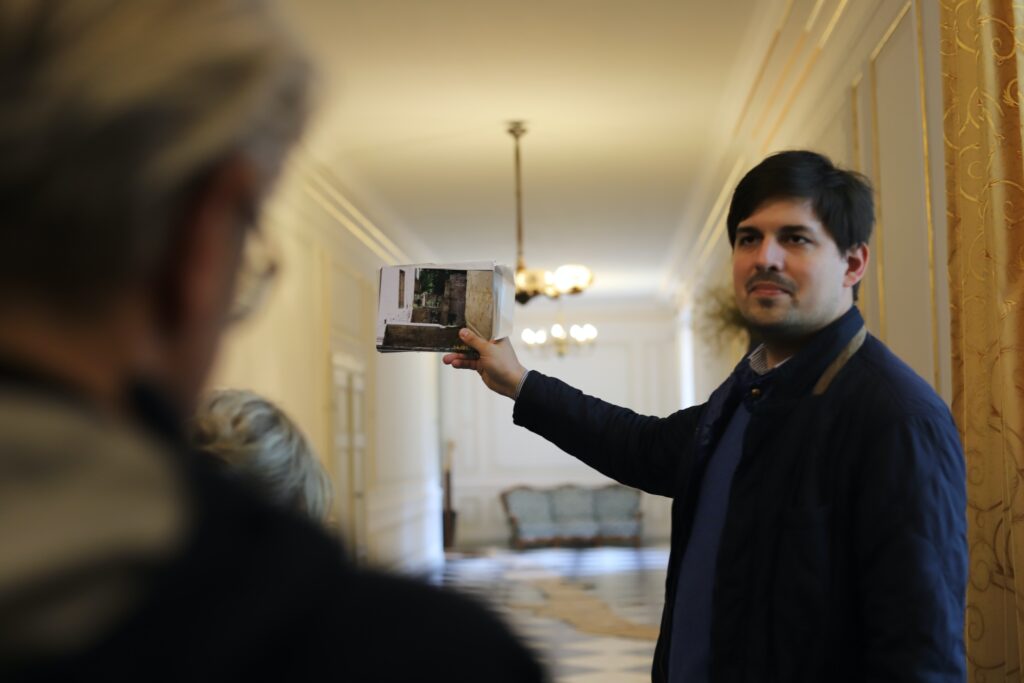
The progressive concept of the “walk-in ruin” is not particularly popular in Poland today, which makes the decision in favour of the Johanniterschloss all the more valuable, explains art historian Dr. Sibylle Badstübner-Gröger, who will guide the study group through the history of the Neumarke residence every three days. Together with Błażej Skaziński from the Monuments Office in Gorzów, they tell and explain about the glorious times before the world wars and the developments and difficulties in dealing with the old German architectural cultural assets for the largely new population groups in the region since 1945. For both the political leadership of the Communist People’s Republic of Poland and the inhabitants of the region, who were resettled after the expulsion of the Germans from Greater Poland, areas of today’s Ukraine and Belarus or with returning prisoners of war, the magnificent buildings were remnants of an alien culture of the Germans and large estate owners, which was also hated by the Second World War.
All the more impressive, however, is today’s growing interest in and increasing care for these cultural assets, whose restoration and maintenance is undoubtedly an elaborate and costly undertaking. For Słońsk, this means that paths are already being paved in front of the building and renovation work has begun inside, with the aim of securing this very “walk-in ruin”, which can then be included in a regional tourism concept and can also be visited and explored digitally with an app.
Of committed, cagey and aristocratic owners
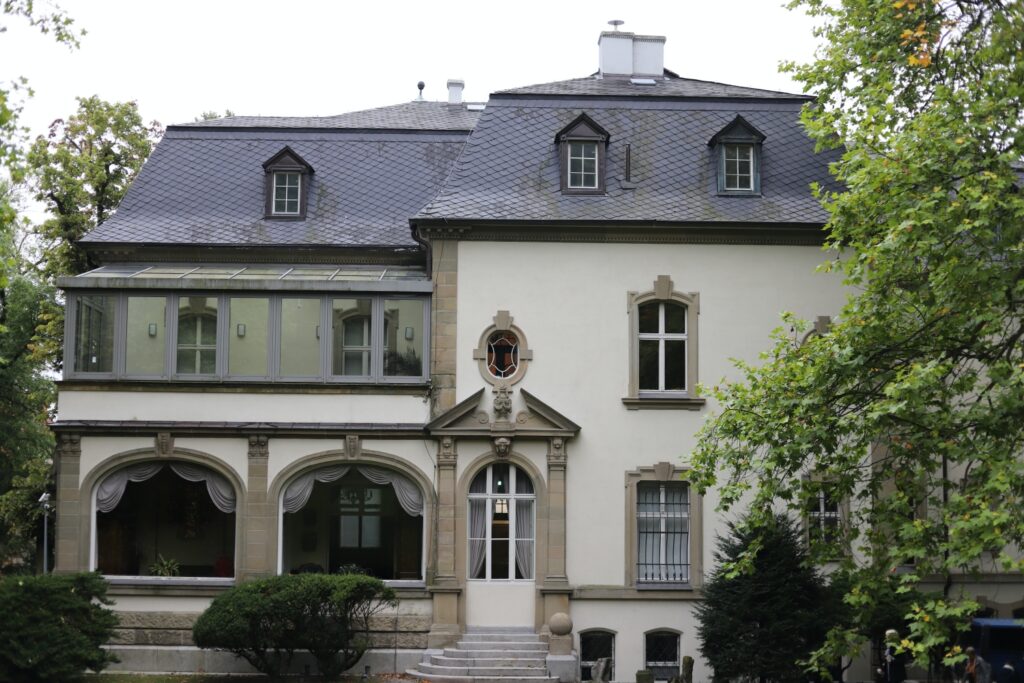
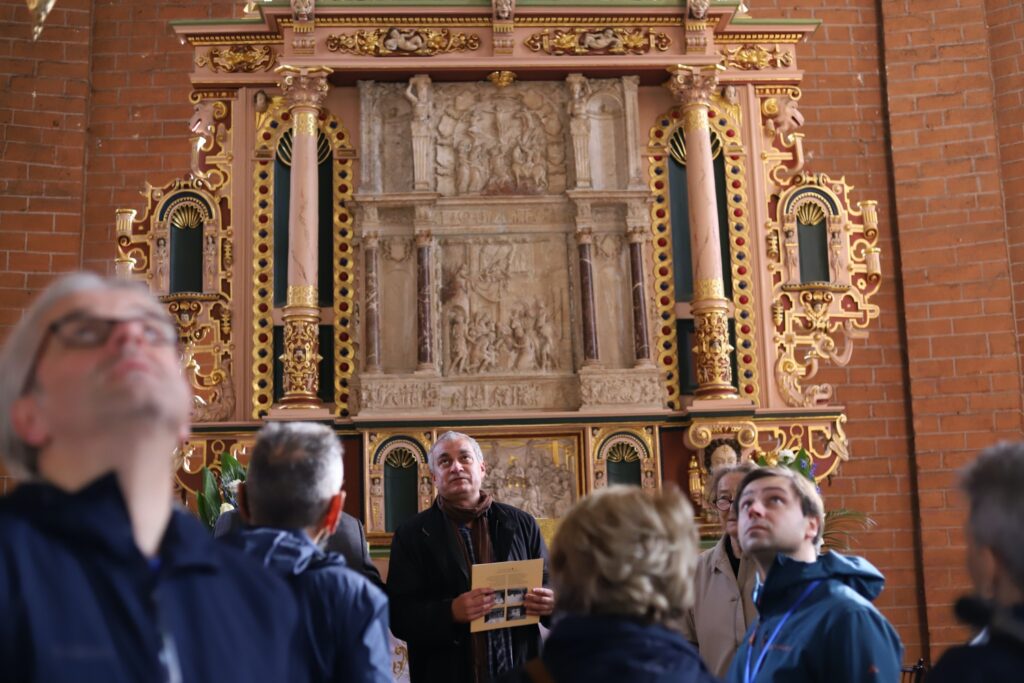
Time is short, the programme tightly knit, the distances to be covered by bus between the residences take their time, partly over bumpy but romantic-looking cobblestone roads. The second stop is Dąbroszyn (Tamsel), where the manor house is locked, possibly for security reasons. But the neighbouring church is open. And the churches, Dr. Badstübner-Gröger emphasises again and again, are also significant in their interaction with the residence building: in the case of Tamsel, for example, valuable busts and tombs of the von Schöning family can be found here in the church, which the group should encounter more often on their Neumark journey.
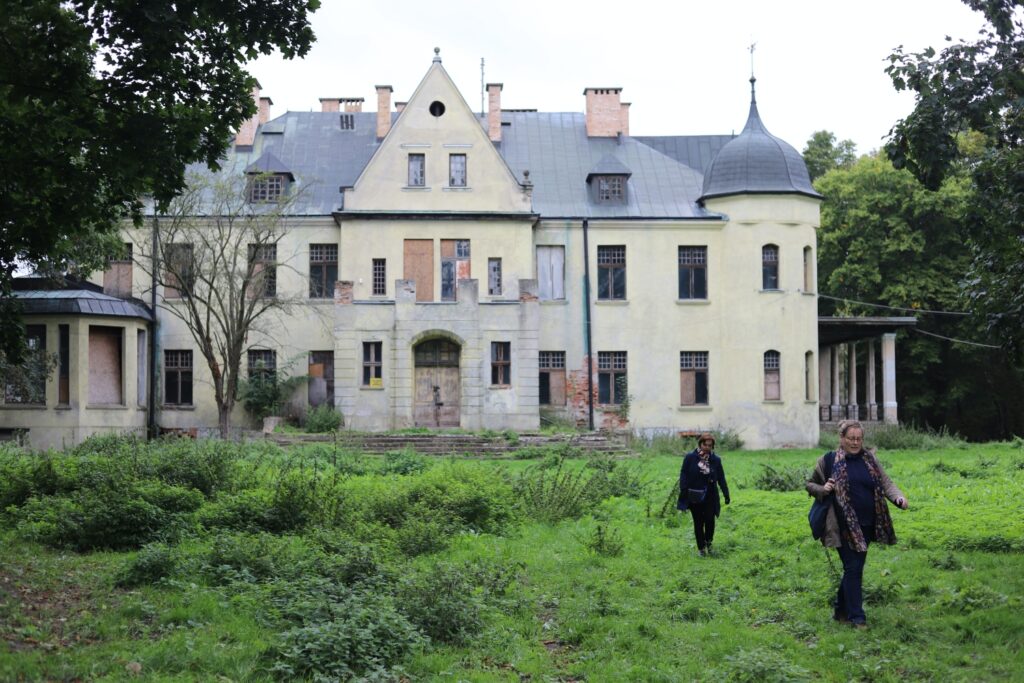
At the castle in Dolsk (Dölzig), on the other hand, the landlord Fryderyk Mudzo and his wife invite visitors on a guided tour of the recently badly dilapidated property, which the young couple and Mudzo’s family are gradually renovating, room by room, and would like to use in future not only for their own use but also for dance events and celebrations.
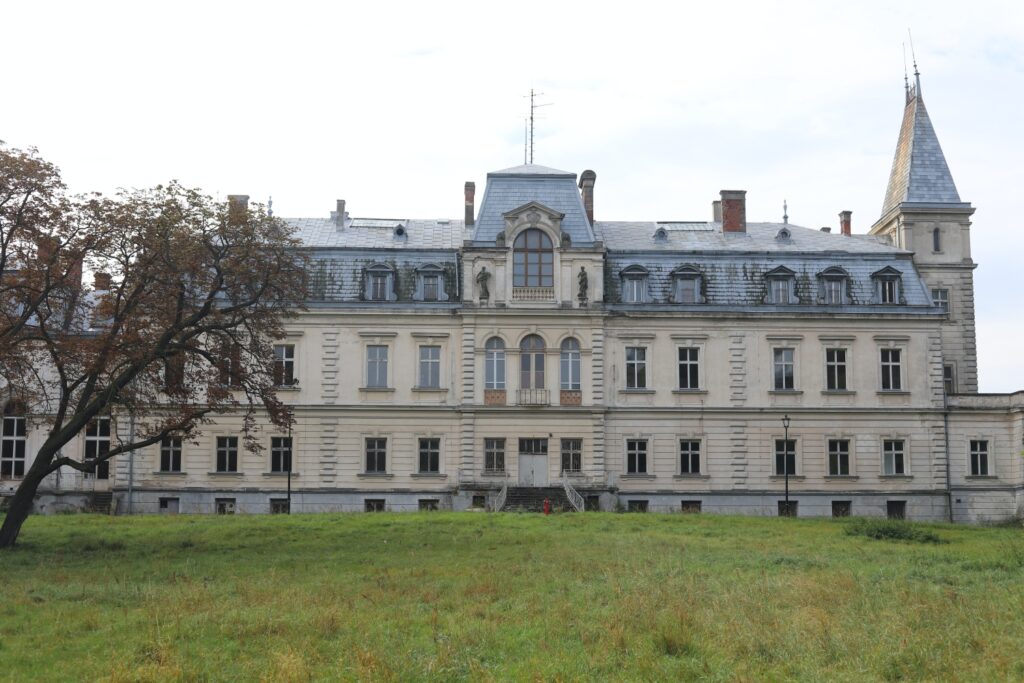
The owners of the property in Jarnatów (Arensdorf) – once built according to plans by the royal Prussian court architect Ernst Eberhard von Ihne – are less optimistic about the future. They travelled all the way from Poznań to give a tour of the building. Although the building fabric here is much better preserved than in Dolsk, as Badstübner-Gröger and Skaziński also emphasise again and again, it has been inhabited exclusively by sheep and goats in recent years, who take care of the wild growth in the vast, wild park with dedication. The last use after 1945 was as a recreation centre for police personnel, of which a pool with a concrete slide in the garden still bears witness. At the other end of the village, hidden in the forest, there is also a mausoleum of the Böttinger family, who owned the manor house from 1909 and continued to design it.
In Lubniewice (Königswalde), which is already more popular with tourists, there are even two castles. The older one is currently being renovated, and the new castle is the seat of a foundation of the Polish noble family Lubomirski, who are also the owners of both castles in the village. The tour group marvels at the richly decorated mansion with knight’s armour, wooden panelling, oriental bathing room and other finesses. In the Schöder Villa in Gorzów, too, numerous details of the former interiors of the old aristocratic residences can be seen: Today, the Lubusz Museum is located here, which has collected pewter objects and pieces of furniture, busts, pictures and other interiors from the region.
Marriage, school or care – everything with a tower
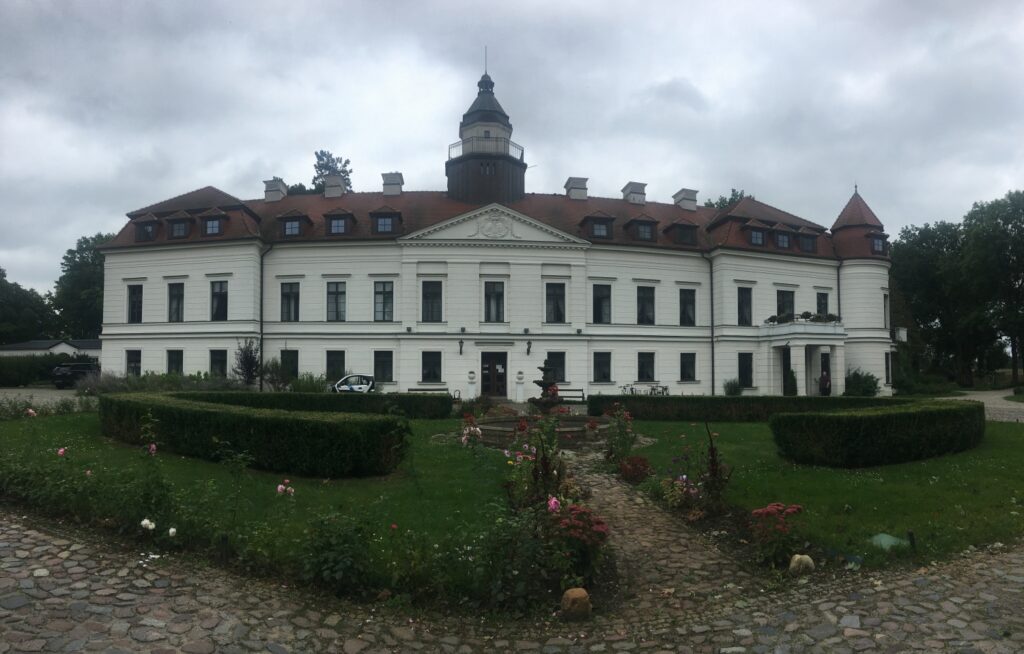
As in other areas, some of the old residences in western Poland are used for gastronomy and as event locations – only understandable, since the restoration and maintenance costs also have to be offset. In Glisno, for example, a “little Sanssouci” with romantic, artificial ruins can be rented. In Wiejce (Waitze) – at the very edge of the voivodeship – a beautifully designed courtyard invites parties. Inside, surprisingly, there are also paintings of German history, e.g. of the founding of the German Empire. Łagów (Lagow) is particularly popular with tourists as a place for excursions, and the castle in particular offers a well-known covered courtyard for celebrations.
In contrast to comparable properties in north-east Brandenburg, which were visited a month earlier, manor houses in Lubuskie are still used as social ones: for example, the estate in Murzynowo (Morrn) – associated with the Berlin architect Karl Heinrich Eduard Knoblauch (1801 – 1895) – houses a primary school. Rooms were also divided for this purpose, which would also have been revealed by the interrupted ceiling stucco, if it had not been addressed by the director herself in her cordial tour.
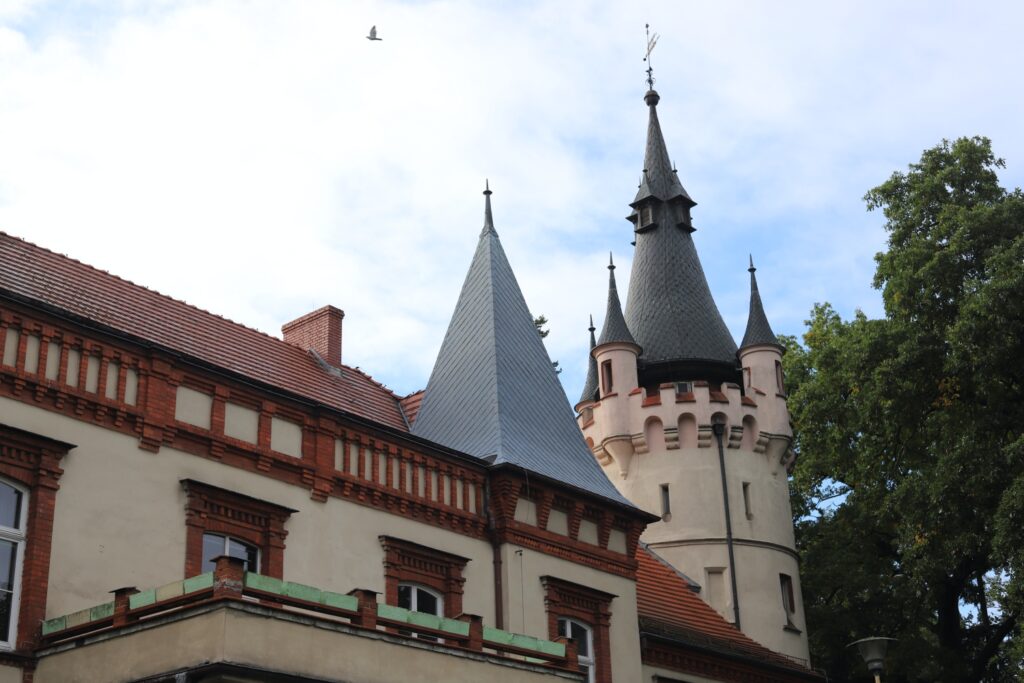
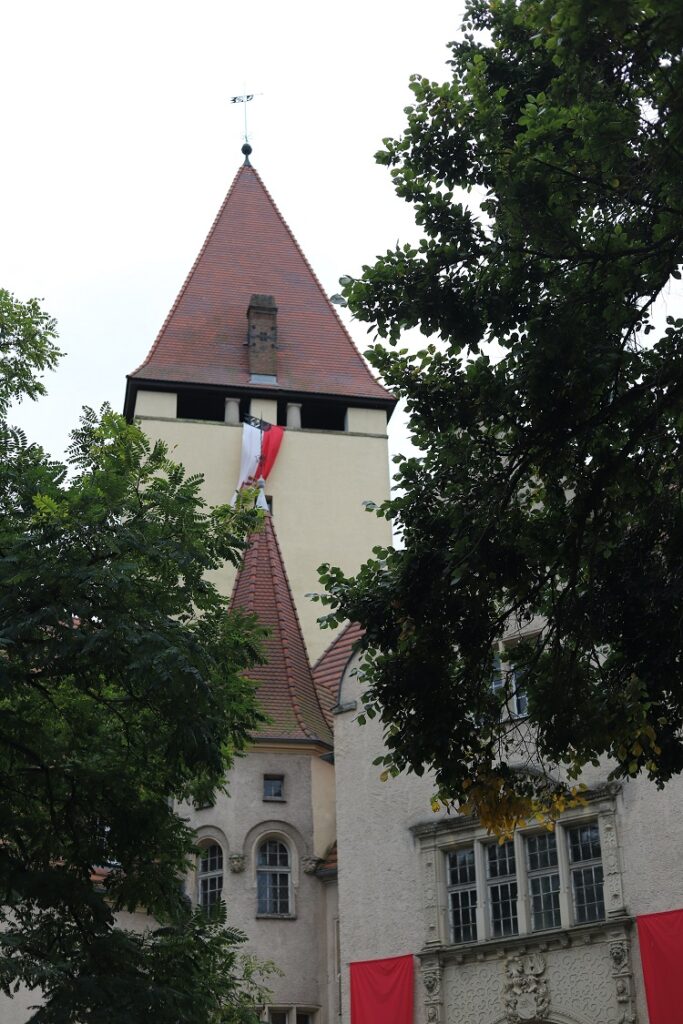
The fairytale-like, almost kitschy castle in Toporów (Topper) is now a nursing home for people with mental disabilities. The complex with its tower simulating the Middle Ages can only be viewed over the fence. The more objects are visited, the more obvious the preference of the clients for towers becomes: even if they were built in the 19th century, they were supposed to symbolise a particularly long – preferably reaching back to the Middle Ages – and strong family tradition, this fashion is explained on site by Dr. Badstübner-Gröger and Prof. Paul Zalewski from the Chair of Monument Studies at the European University Viadrina, who organised the study trip.
In Trzebiechów (Trebschen) everything can be found in one place: the sanatorium and now old people’s home in the Art Nouveau style of the early 20th century, built by the Dutch architect Henry van de Velde, and next door the Renaissance castle Friedrichshuld, rebuilt in the Baroque style, formerly owned by the Princes of Reuss, whose main building was designed in the 19th century by the Viennese architect Viktor Rauz. At the other end of the visual axis following the Dorfstraße is a late classicist church from 1840, which follows the style of Schinkel.
The end of being a stranger?
In Wilkowo (Wilkau), a large farmyard with buildings made of fieldstone and agricultural machinery, guarded by dogs, lies next to the villa by the lake, whose terrace, flight of steps and footbridge to the lake glow in the autumn evening sun. Despite all the research, the owner could not be found. In Sulechów (Züllichau), meanwhile, the castle building with its historic keep now serves as a cultural centre and tourist information centre in the centre of town. A walk past the – once Calvinist! – church across the market to the Crossener Tor (Crossen Gate) points to the last stop on the afternoon of the third day of the excursion: The study tour then ends at the Piast Castle in Krosno Odrzańskie (Crossen an der Oder), an art and cultural centre on the Oder with a lively guided tour through the colourful museum rooms. After these three days, there is no longer any sign of the strangeness to be expected from a historical perspective: not within the mixed curious group of students, lecturers, people involved in heritage conservation or simply interested people from the region, not in the way the manor house owners deal with the objects, who seem to decide more according to pragmatic aspects such as funding options and economic efficiency.
Fot.: P. Lohse