

From splendour to ruin. Viadrina study trip delves into the fate of Brandenburg residences
From splendour to ruin: Viadrina study trip delves into the fate of Brandenburg residences
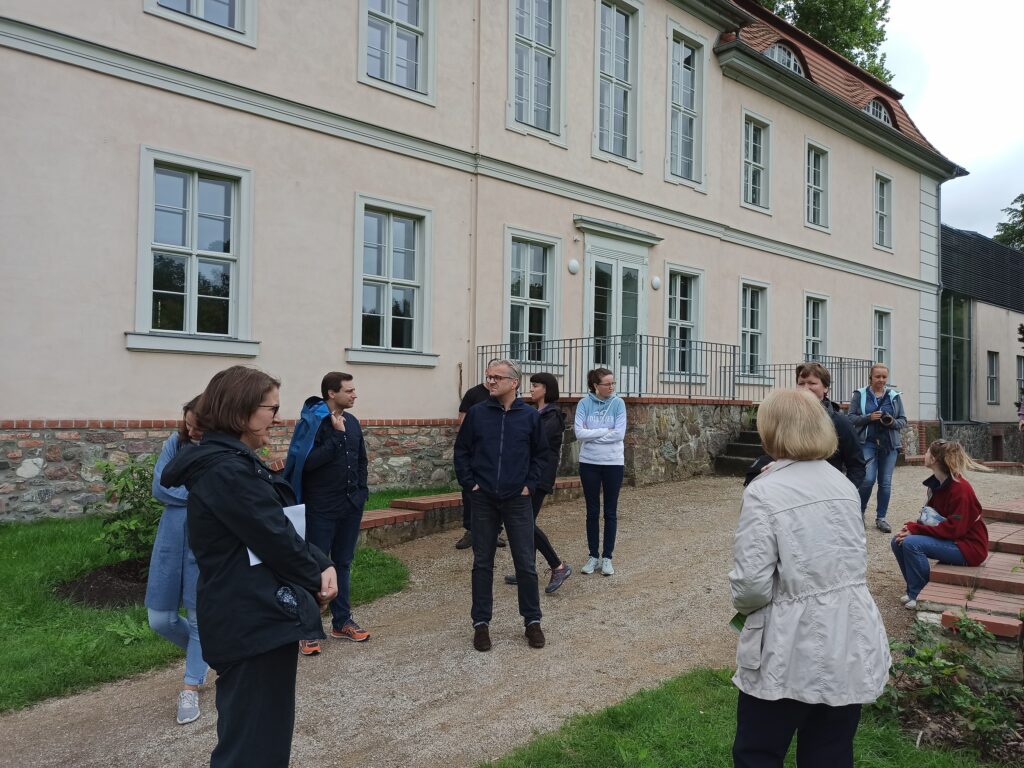
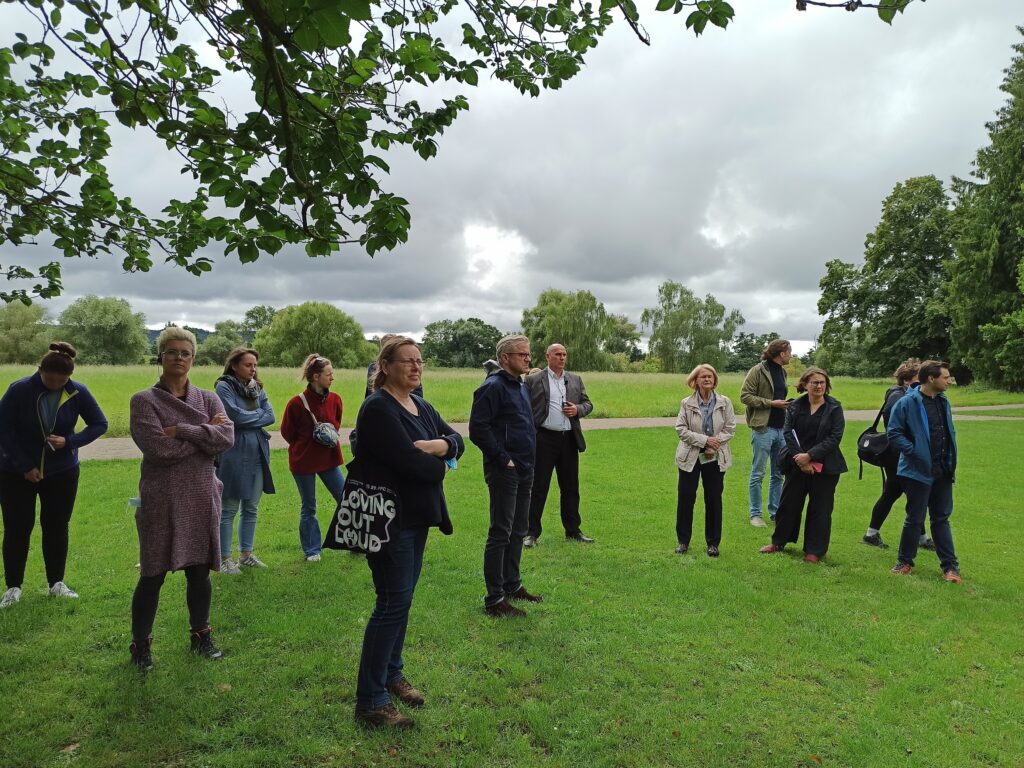
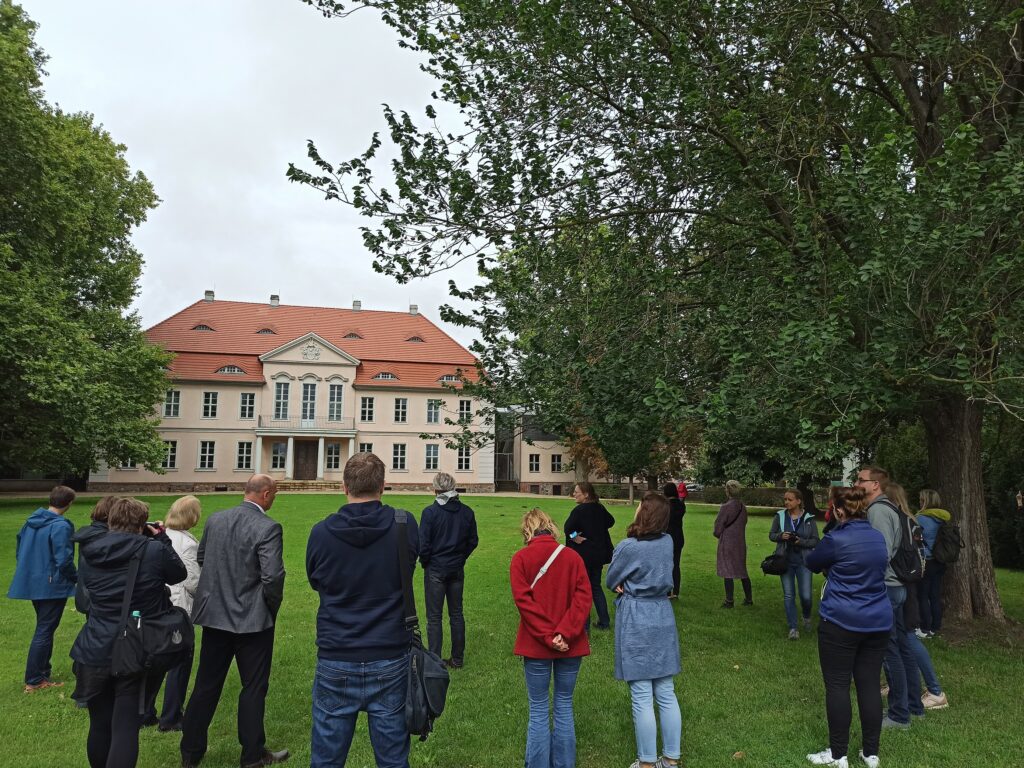
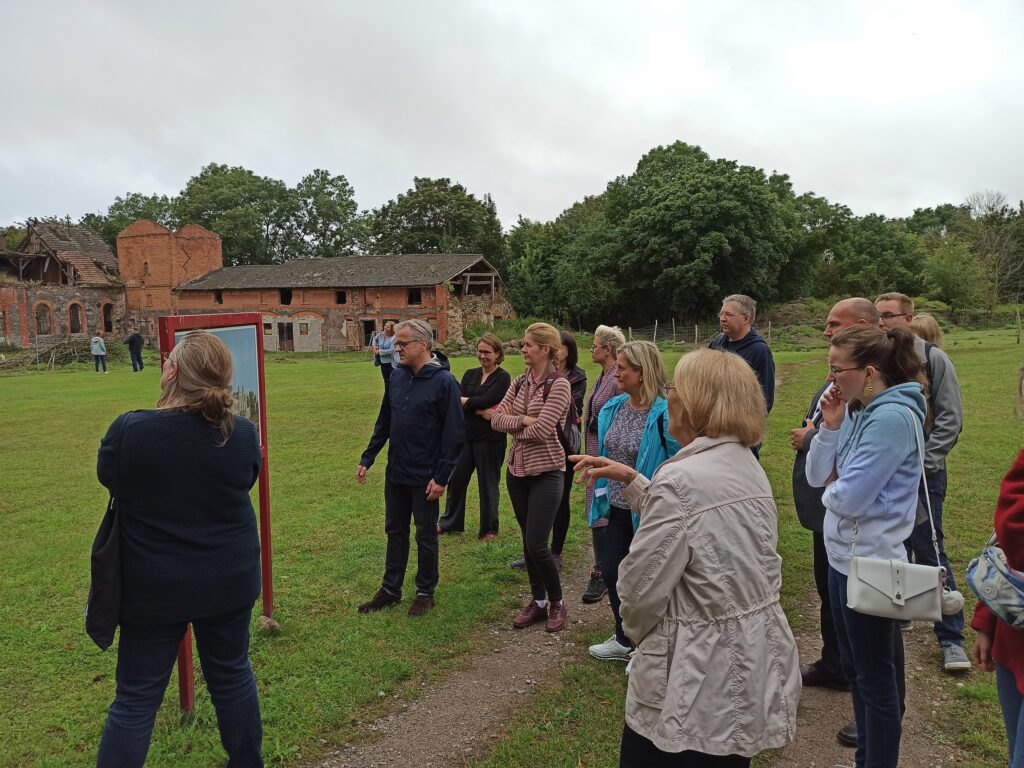
Hundreds of estates and castles adorn Brandenburg. Some are decaying and at best are still useful as film sets. Others accommodate hotel guests or educational projects, and a few are even home to descendants of their former owner families. How complex and difficult the historical past of the objects as well as future utilisation concepts are, was explored by a study tour group with the Chair of Monument Studies in Northeast Brandenburg on 28 and 29 August 2021.
Peggy Lohse
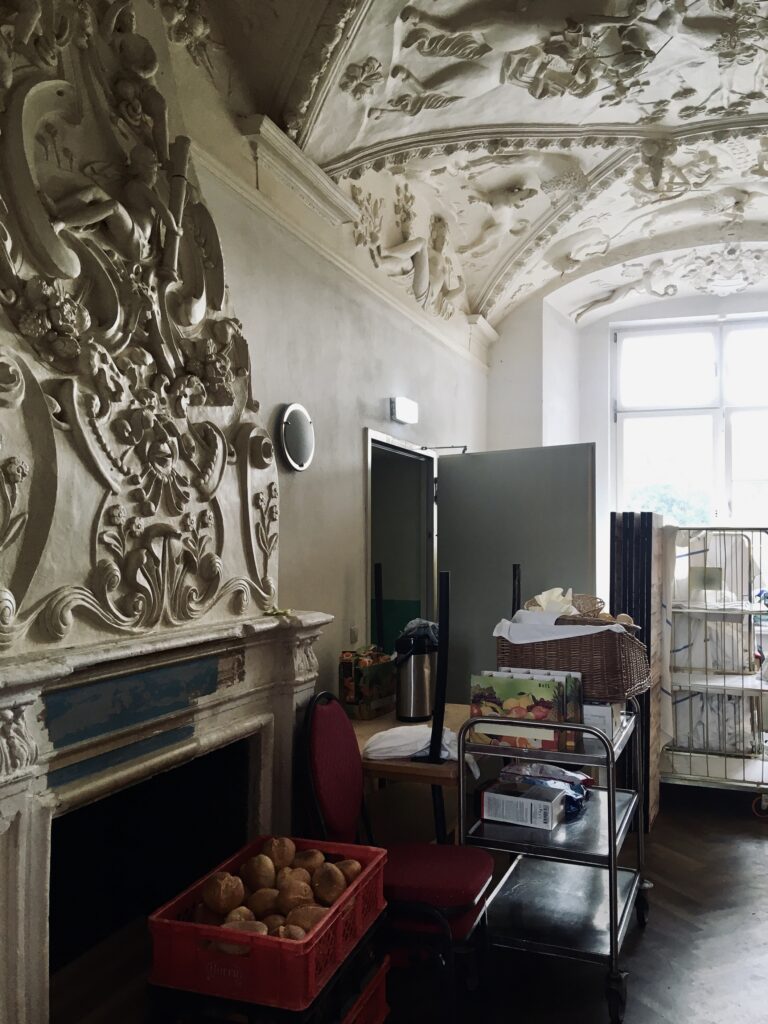
“Risen from Ruins…” – from the ceiling of the ballroom in the Blumberg Manor House, painted scraps of newspaper come loose and hang down like pennants. Two, already lying on the floor, show October 1949 as the date of publication – and a print of the GDR anthem. “… and turned towards the future …” – as much as the GDR, with its land reform and pragmatic treatment of historical buildings, damaged the substance of old manor houses and residential castles here in East Brandenburg, the first line of its state song seems all the more paradoxical and fitting at the same time for the present and future of those estates.
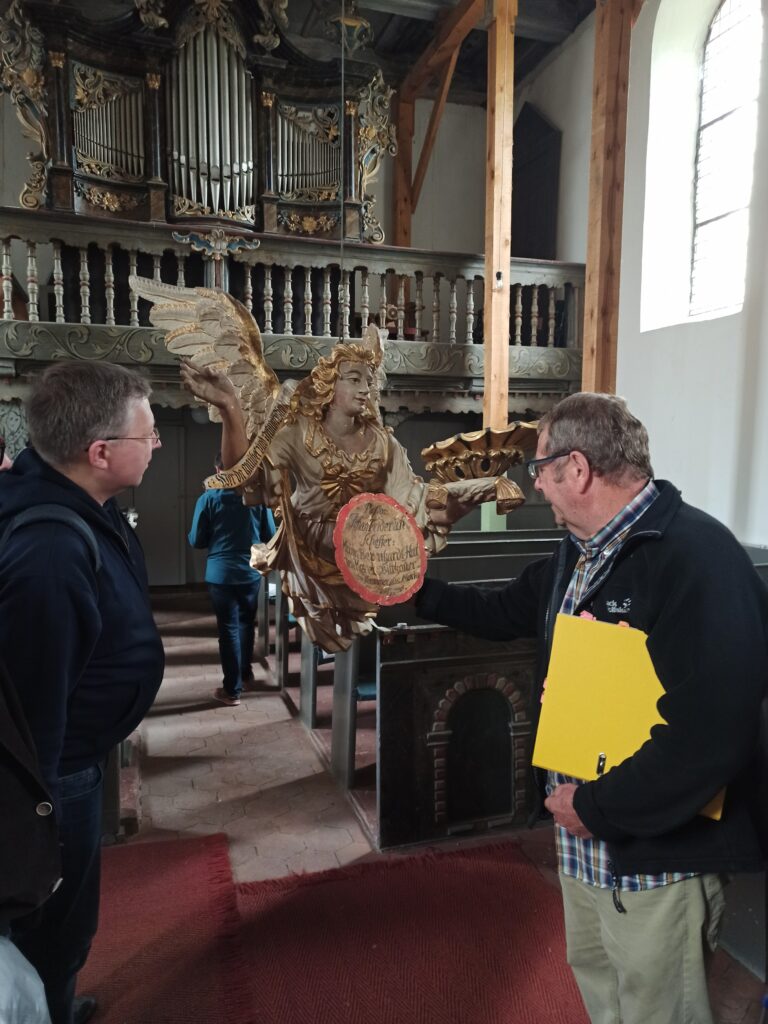
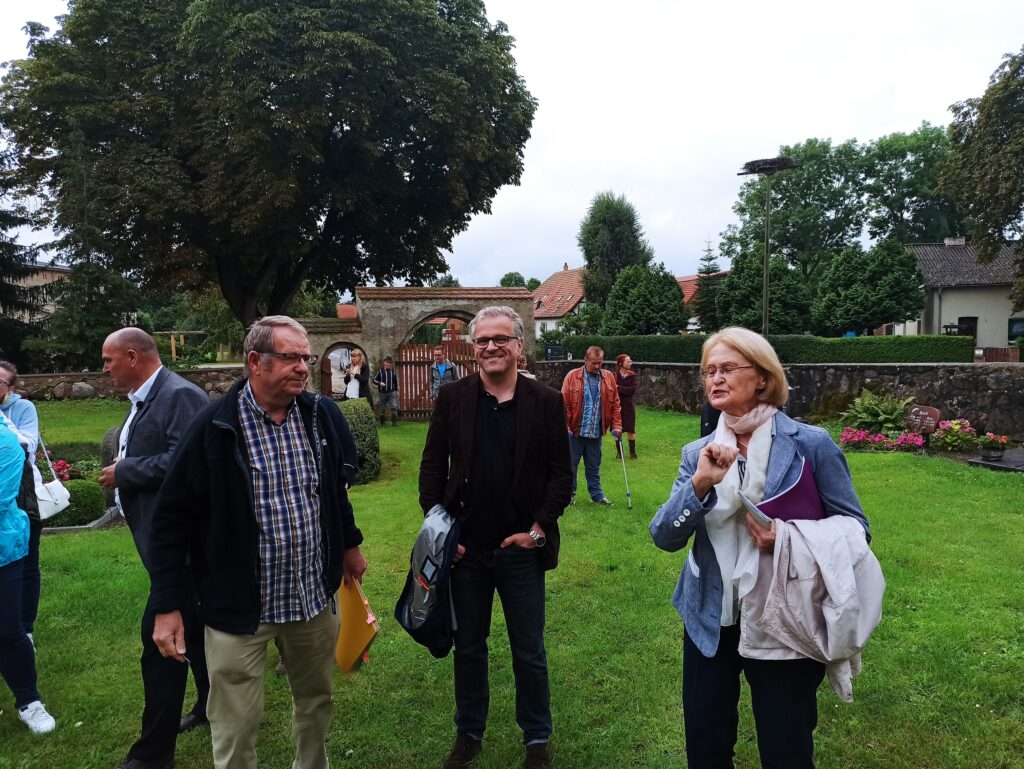
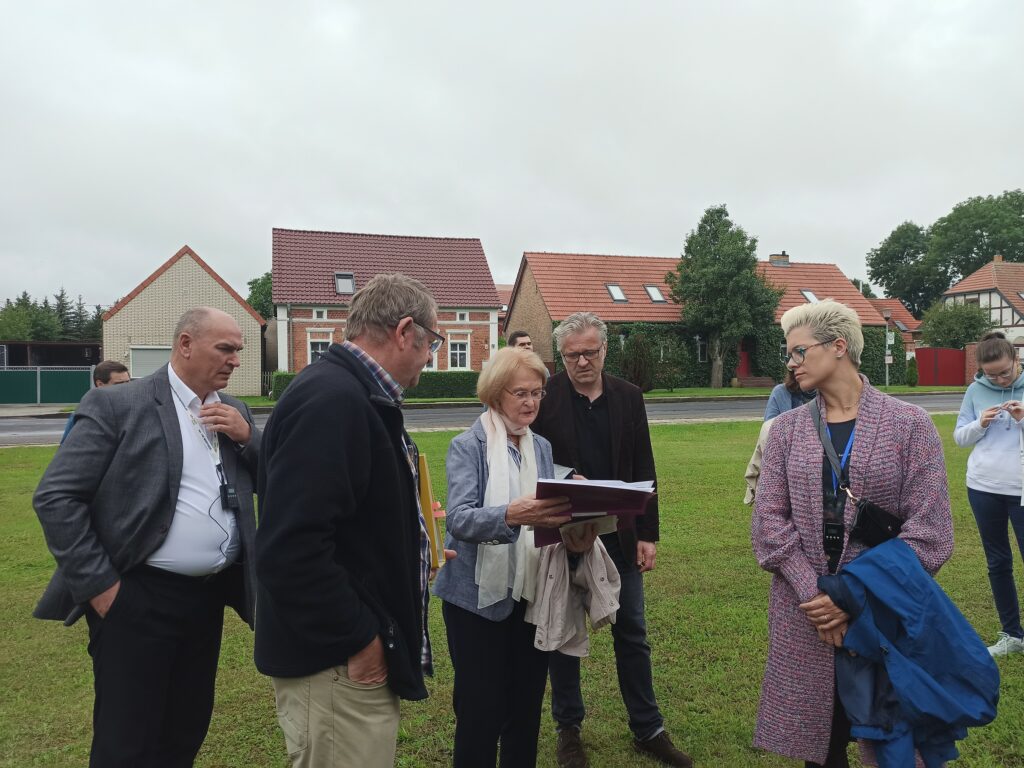
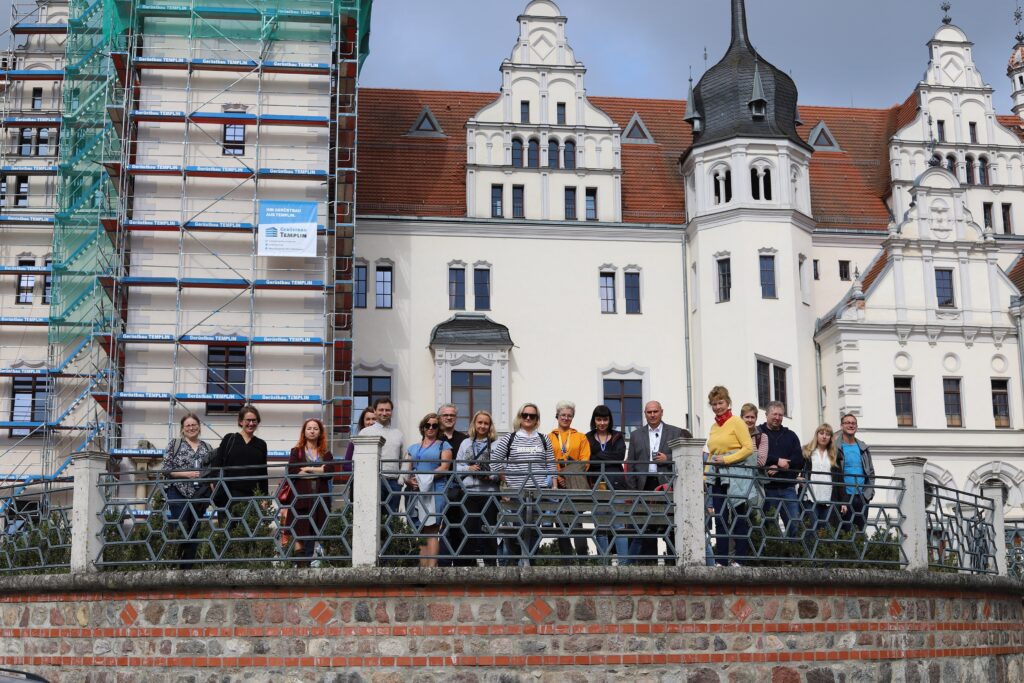
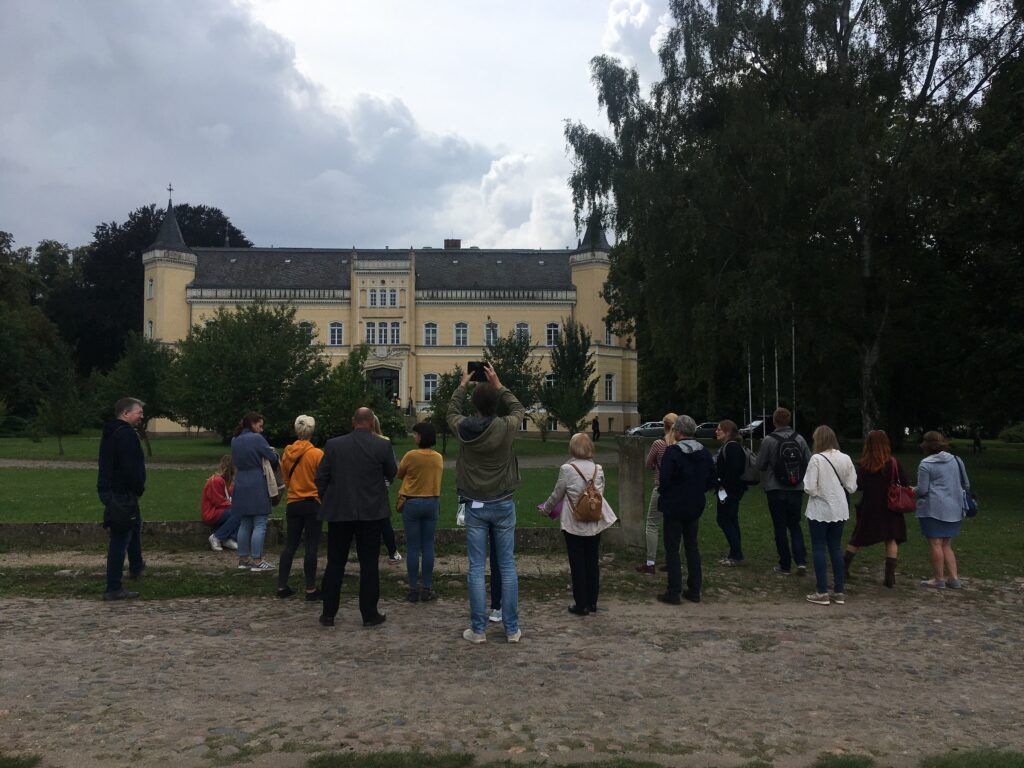
On a gloomy and grey weekend in August, a curious German-Polish group consisting of members of the Chair of Monument Studies at the European University Viadrina, alumni and students from various disciplines, employees of the monument protection authorities in Frankfurt (Oder) and Zielona Góra and interested citizens of the region set out on a journey to get to know the architecture, condition and development of very different residences in the Uckermark, Märkisch Oderland and Oder-Spree districts.
There are around 800 historic manor houses and palaces in Brandenburg alone, explains the tour guide, art historian and former cultural journalist Marie Luise Rohde of the “Freundeskreis Schlösser und Gärten der Mark” (Friends of Palaces and Gardens in the Mark) early on Saturday morning as the group rolls by bus through the morning mist in the Uckermark. On the programme for the two-day trip are eleven objects – from modest to magnificent, from Baroque to Classicism and Historicism to Schinkel.
As a heterogeneous group, the residences reflect different stages and scenarios of social and cultural change. At the same time, they form important crystallisation points of staged and built representation. Finally, they also conceal memories of reactionary entanglements, breaks with tradition or failed reforms of the modern age. The expropriation and change of function of most of the manor houses after 1945 proceeded here in a similar way as in western Poland on behalf of the socialist state, but without the barrier of national hostility. Privatisation and re-use after the fall of communism started hesitantly on both sides of the Oder.
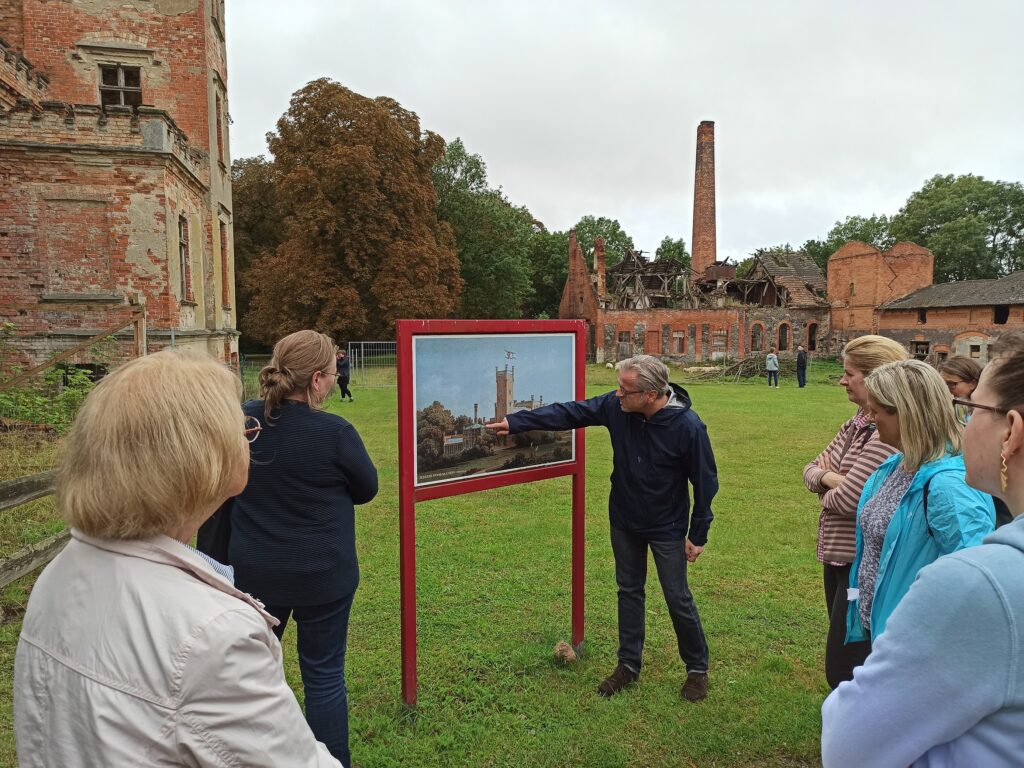
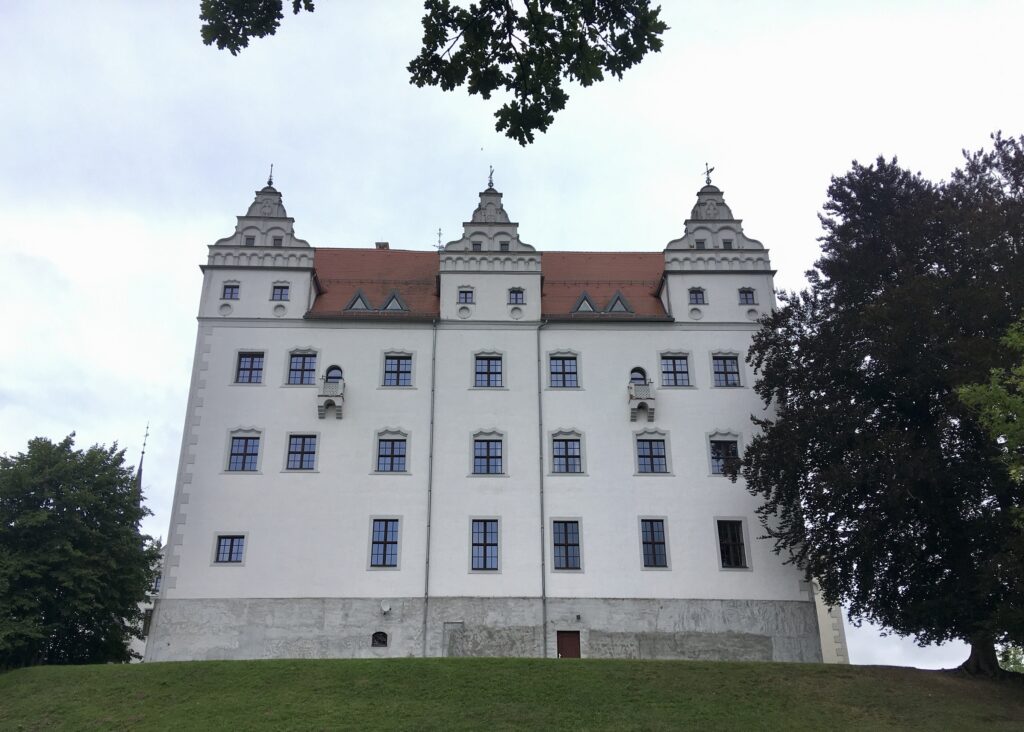
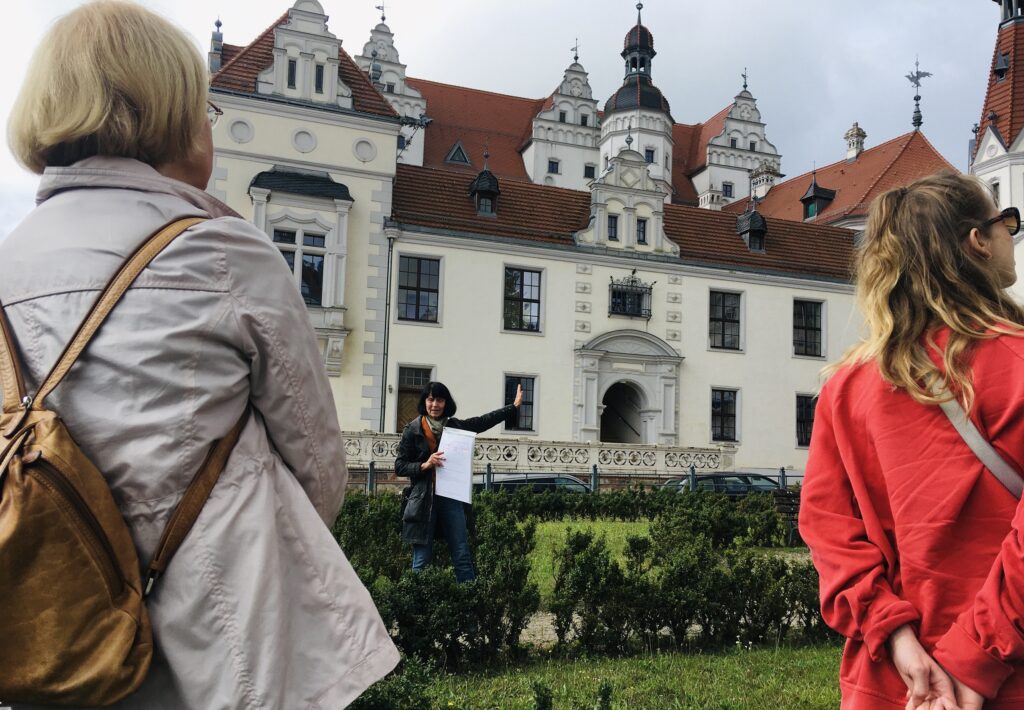
Besides Marie Luise Rohde and Professor Paul Zalewski, local experts explained exactly how this was done at many of the stops on the study tour. Art historian Beatrix Blum explained the architectural development and transformations of Boitzenburg Castle, which is now used as a hotel for children and young people and as a venue for events. Dr Charles Elworthy reported on the history of his house in Wartin Castle, which was also a Gauleiter school during the National Socialist era, to its current use as an exchange place for students and space for music festivals. The loving furnishings and personal warmth that characterise the house and the grounds today made a particular impression on the study tour group, as many participants recounted the following day.
In the Blumberg manor house, Henning von der Osten – one of three brothers who bought back the manor and a forestry farm after the fall of communism – told of the organisation of the extension of the house with living quarters for the owner families and, in the future, also parts to be made available to the village in the municipality of Casekow. Among them is the ballroom with the newspaper remains, which is still a building site.
The castle ruins and the castle of Zichow as well as the castle of Hohenlandin only remind us in details of a splendid and glorious history, as both are no longer inhabited or used and thus continue to decay. In Felchow, on the other hand, even the community itself has managed to renovate the interior of the manor house and make it usable for the community. Local historian Richard Borchert shows private photos from the times before the fall of communism, when – as in almost all the buildings on the trip – a crèche and nursery, grocery shop and hairdresser’s shop were housed here. Directly after the end of the Second World War, the spacious buildings also often served as the first accommodation for refugees from the former German eastern territories.
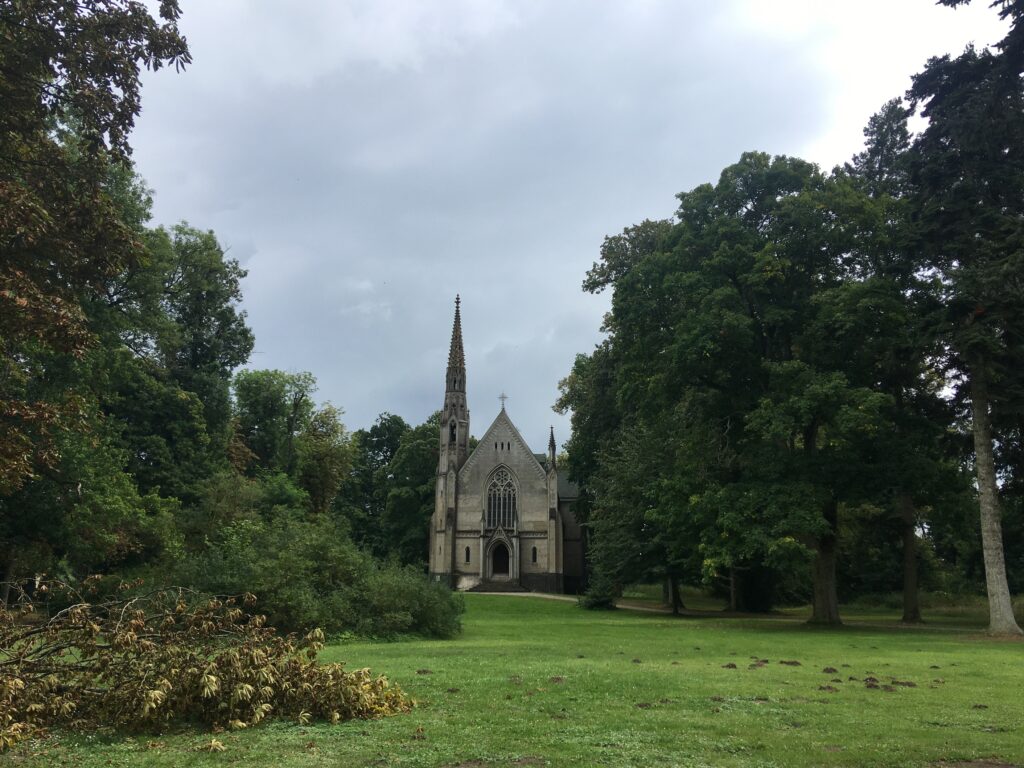
The grey and rainy second day of the trip then ended with several very positive examples of utilisation and redevelopment concepts: Criewen Castle is a popular destination for excursions as a place of education, seat of the Lower Oder Valley National Park Administration and with its well-kept Lenné Landscape Park; similarly, the Oderbruch Museum in Altranft and the castle in Neuhardenberg with the neighbouring Schinkel Church. In the Sieversdorf manor house, not far from the starting point of the tour in Frankfurt (Oder), Karl-Christoph von Stünzner-Karbe then presented how his family had recovered and redesigned the half of the manor house that had not been destroyed and the associated farm.
Thus ended the very lively and impressive study tour, which was also the conclusion of an online seminar at the Chair of Monument Studies. The four students Alla Bahlei, Amelie Sand, Marie Müller and Lukas Lindemann are glad that the excursion allowed them to experience their seminar content even more vividly: “It’s impressive to experience the buildings in reality, and to hear the stories from the owners themselves.” The mixed group also included the Frankfurt couple Roswitha and Hans-Jürgen Richter, who had signed up for the study trip mainly out of curiosity. “You don’t know many of these places. And if you do, you don’t visit them one after the other and then have no comparison.” Alexandra Jelitte, a graduate of the “Culture and History of Central and Eastern Europe” course and now working at the Federal Foreign Office in Berlin, has a similar opinion: “I love such journeys of discovery, such objects in relatively remote places.
Fot. P. Migdalski & P. Lohse